Commercial Cleaning Experts
  • Commercial Cleaning Services
        • Janitorial Services
        • Day Porters
        • Deep Cleaning Services
        • Clean Room Services
        • Construction Cleaning
        • Hard Floor Cleaning
        • Carpet Cleaning
  • Industries
    • Commercial Office
    • Medical
    • Warehouse/Distribution
    • Industrial Facilities
    • Education
    • Clean Room
  • About Us
    • Areas We Serve
      • Minnesota
      • South Dakota
      • North Dakota
      • Michigan
      • Wisconsin
    • Blog
    • Careers
  • (763) 421-9554
  • Contact Us
  • Menu Menu

Breaking Down Clean Room Cleaning Science: Tools, Filters, and Protocols

From directional airflow systems to non-shedding wipes, clean room cleaning science is about more than just keeping a space tidy. In this article, we’ll break down the fundamental components that make clean room cleaning effective. Whether you manage a controlled manufacturing environment or simply want to understand what sets professional clean room services apart, this guide will give you a clearer picture of the techniques, equipment, and systems that protect your critical space.

Explore the clean room cleaning science behind contamination control, including filtration systems, specialized equipment, and validated cleaning techniques.

Why Clean Room Cleaning Is a Scientific Process

Unlike traditional commercial spaces, clean rooms must meet strict particulate thresholds defined by standards like ISO 14644. Every particle that enters, moves through, or settles in the room must be accounted for and controlled. That means cleaning is part of a larger contamination control system—not just an aesthetic task, but a science-driven function.

At the heart of clean room cleaning science is the understanding that air, surfaces, and tools all interact in ways that can introduce risk. From how air flows through the space to how a mop moves across a floor, every detail is intentional. Cleaning teams must use validated procedures that minimize particle movement, eliminate residue, and prevent recontamination.

The Importance of Filtration in Clean Room Cleaning Science

One of the most important elements of clean room functionality—and by extension, clean room cleaning—is air filtration. Clean rooms rely on advanced systems like HEPA (High Efficiency Particulate Air) and ULPA (Ultra-Low Penetration Air) filters to capture airborne particles before they can settle on surfaces or products.

In clean rooms, filtration systems work hand-in-hand with airflow control. Directional airflow pushes air in smooth, consistent streams across workspaces to sweep particles away from critical zones. Cleaning teams must understand this so their movements, equipment use, and timing don’t disrupt this protective flow.

Maintaining and inspecting filters is also part of the broader cleaning strategy. When filters lose efficiency, allowing more contaminants to circulate. That’s why clean room cleaning science always includes close attention to airflow paths, vents, and filtration components as part of a holistic contamination control effort.

How Specialized Equipment Supports Contamination Control

In clean rooms, even the tools used for cleaning can become a source of contamination if they’re not chosen carefully. Standard commercial cleaning gear—like cotton mops, unfiltered vacuums, or scented disinfectants—can introduce fibers, chemicals, and particles that compromise the integrity of the controlled environment.

That’s why clean room cleaning science depends on equipment specifically designed to meet strict clean room requirements. These tools are engineered to reduce particle generation, withstand disinfection, and function without disrupting airflow or introducing static.

Some of the most common and critical equipment includes:

  • HEPA-filtered vacuums: Used to remove microscopic particles from floors and surfaces without redistributing them into the air
  • Non-shedding mops and wipes: Made from materials like polyester or microfiber that don’t release fibers or debris, even during extended use
  • Stainless steel carts and tools: Easy to sanitize, corrosion-resistant, and compatible with clean room disinfectants
  • Specialized mop buckets with dual-basin systems: Separate clean and dirty fluids to prevent cross-contamination during mopping procedures

In addition to these supplies, some clean rooms utilize supplemental equipment like ionized air blowers or air showers to reduce static or remove particulates from personnel before entry. While not part of routine cleaning, these technologies are part of the broader contamination control strategy that cleaning teams must work around and understand.

Ultimately, the use of the right clean room cleaning equipment ensures that every cleaning task supports the goal of maintaining particle control, not accidentally making things worse.
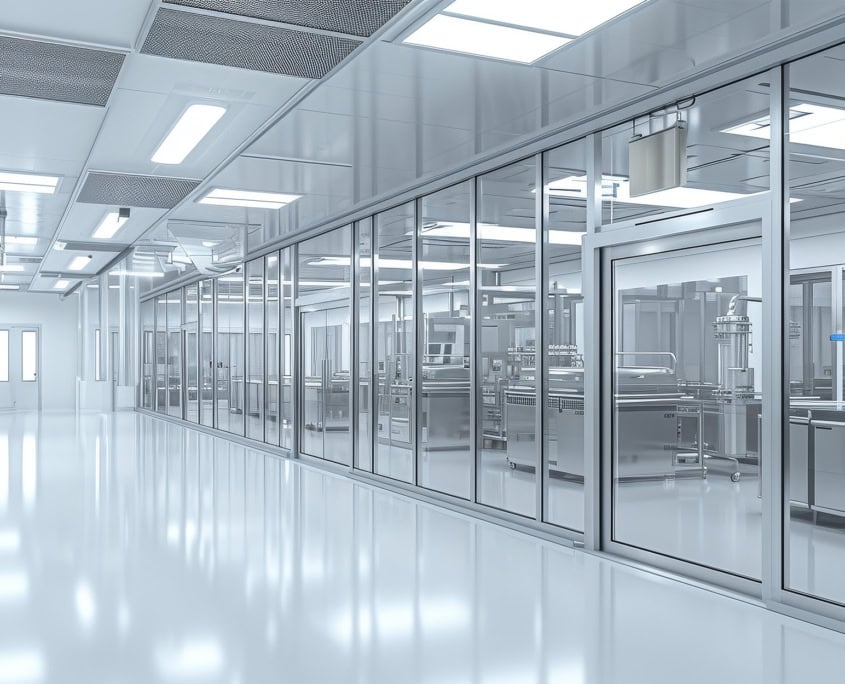
Looking to maintain a safe clean room environment? Learn about the most common sources of contamination—and how to stop them before they compromise your efforts.

Read More

Validated Clean Room Cleaning Techniques

In clean room environments, cleaning is never improvised. Every movement, material, and method is carefully selected and repeated to ensure consistency and control. Unlike general cleaning routines that prioritize speed or visual results, clean room cleaning techniques are built around repeatable processes designed to reduce risk and meet regulatory expectations.

These techniques are essential to supporting contamination control goals and preventing reintroduction of particles, microbes, or residues during routine cleaning.

Common validated cleaning techniques include:

  • Unidirectional wiping and mopping: Cleaners move in straight, single-pass motions—usually top to bottom or back to front—to avoid redistributing contaminants.
  • Disinfectant rotation: Alternating approved disinfectants helps prevent microbial resistance and supports long-term sanitation effectiveness.
  • Residue-free application: Clean room disinfectants are carefully measured and applied to avoid leaving behind films that could interfere with processes or materials.
  • Zoned tool usage: Tools are often color-coded and restricted to specific areas (e.g., ISO Class 5 vs. Class 7 zones) to prevent cross-contamination.

Cleaning teams should be trained on how to perform these tasks, when they need to be performed, and why they’re performed. That level of discipline ensures that every cleaning cycle supports the clean room’s overall effectiveness and compliance.

This is where the depth of clean room cleaning science really becomes apparent: it’s not just what gets cleaned—it’s how, in what order, with what tools, and under what conditions.

Why Professional Training Makes the Difference

Clean room cleaning is not a task that can be handed off to just any cleaning crew. It requires professionals who understand the science, respect the procedures, and commit to the highest levels of precision. That’s why professional training is at the core of effective clean room cleaning science.

When you work with trained specialists, you gain real confidence in your contamination control strategy. Let’s take a look at why.

Trained in Contamination Control

Clean room professionals are taught to see cleaning as a form of risk mitigation. They know how airborne particles behave, how cross-contamination occurs, and how to clean without disrupting controlled conditions.

They’re trained in:

  • Clean room classifications (e.g., ISO 14644)
  • Correct entry and exit procedures
  • Gowning protocols and personal hygiene controls
  • Surface cleaning and disinfection sequences

This knowledge empowers them to make informed decisions in dynamic environments, something general janitorial staff aren’t equipped to do.

Consistent, Repeatable Execution

Professionally trained teams don’t just know what to do—they know how to do it the same way, every time. Repeatability is essential in clean room cleaning, and it only happens when cleaners understand both the “how” and the “why” behind their procedures.

That’s why teams are often trained on specific SOPs (standard operating procedures), with periodic performance reviews and ongoing education.

A Partner in Compliance and Safety

Hiring a team trained in clean room cleaning science means you’re getting a partner in compliance. These professionals can help maintain your cleaning documentation, prepare for inspections, and adapt cleaning protocols to meet evolving industry standards.

In environments where product integrity, audit readiness, and operational uptime are critical, working with certified clean room cleaning professionals is essential.

Put Clean Room Cleaning Science to Work in Your Facility With CCE

At Commercial Cleaning Experts, we don’t just clean—we follow the science. Our trained specialists understand every detail of your clean room requirements, from filtration and airflow to validated techniques and contamination control. If your facility demands more than basic janitorial care, partner with a team that’s built for precision, compliance, and long-term reliability.

Share This Post

  • Share on Facebook
  • Share on X
  • Share on WhatsApp
  • Share on Pinterest
  • Share on LinkedIn
  • Share on Tumblr
  • Share on Vk
  • Share on Reddit
  • Share by Mail

More Like This

Controlled Environments Beyond Cleanrooms: Where Standards Apply

Clean Room Cleaning, Compliance, Controlled Environment Cleaning
https://cleanworkplaces.com/wp-content/uploads/2025/12/Controlled-Environments-Beyond-Cleanrooms_-Where-Standards-Apply.jpg 1250 2000 Abstrakt Marketing /wp-content/uploads/2024/02/Logo-Edited.png Abstrakt Marketing2025-12-18 14:56:392026-05-07 14:18:21Controlled Environments Beyond Cleanrooms: Where Standards Apply
A Clean Room Cleaning Frequency Breakdown

A Clean Room Cleaning Frequency Breakdown

Clean Room Cleaning
https://cleanworkplaces.com/wp-content/uploads/2025/07/A-Clean-Room-Cleaning-Frequency-Breakdown.jpg 1250 2000 Abstrakt Marketing /wp-content/uploads/2024/02/Logo-Edited.png Abstrakt Marketing2025-07-07 07:50:142026-05-07 14:18:27A Clean Room Cleaning Frequency Breakdown
Understanding the Most Common Clean Room Maintenance Mistakes

Understanding the Most Common Clean Room Maintenance Mistakes

Clean Room Cleaning
https://cleanworkplaces.com/wp-content/uploads/2025/07/Understanding-the-Most-Common-Clean-Room-Maintenance-Mistakes.jpg 1250 2000 Abstrakt Marketing /wp-content/uploads/2024/02/Logo-Edited.png Abstrakt Marketing2025-07-07 07:39:262026-05-07 14:18:27Understanding the Most Common Clean Room Maintenance Mistakes
The Clean Room Cleaning Process: Step-by-Step Breakdown of What You Can Expect

The Clean Room Cleaning Process: Step-by-Step Breakdown of What You Can Expect

Clean Room Cleaning
https://cleanworkplaces.com/wp-content/uploads/2025/07/The-Clean-Room-Cleaning-Process-Step-by-Step-Breakdown-of-What-You-Can-Expect.jpg 1250 2000 Abstrakt Marketing /wp-content/uploads/2024/02/Logo-Edited.png Abstrakt Marketing2025-07-07 07:32:422026-05-07 14:18:28The Clean Room Cleaning Process: Step-by-Step Breakdown of What You Can Expect

5 Industries That Rely on Cleanroom Cleaning (and Why It Matters)

Clean Room Cleaning
https://cleanworkplaces.com/wp-content/uploads/2025/06/5-Industries-That-Rely-on-Cleanroom-Cleaning-and-Why-It-Matters.jpg 1250 2000 Abstrakt Marketing /wp-content/uploads/2024/02/Logo-Edited.png Abstrakt Marketing2025-06-03 09:03:312026-05-07 14:18:285 Industries That Rely on Cleanroom Cleaning (and Why It Matters)
Handsome hispanic man working as scientific cleaning the table at laboratory

Why Clean Room Cleaning Services Aren’t Your Average Janitorial Job

Clean Room Cleaning
https://cleanworkplaces.com/wp-content/uploads/2025/06/Handsome-hispanic-man-working-as-scientific-cleaning-the-table-at-laboratory.jpg 1250 2000 Abstrakt Marketing /wp-content/uploads/2024/02/Logo-Edited.png Abstrakt Marketing2025-06-02 12:52:502026-05-07 14:18:29Why Clean Room Cleaning Services Aren’t Your Average Janitorial Job
How to Prevent Common Clean Room Contamination Sources

How to Prevent Common Clean Room Contamination Sources

Clean Room Cleaning
https://cleanworkplaces.com/wp-content/uploads/2025/05/How-to-Prevent-Common-Clean-Room-Contamination-Sources.jpg 1250 2000 Abstrakt Marketing /wp-content/uploads/2024/02/Logo-Edited.png Abstrakt Marketing2025-05-09 10:56:502026-05-07 14:18:30How to Prevent Common Clean Room Contamination Sources
In-House Cleaning vs. Professional Cleaning for Controlled Environments

In-House Cleaning vs. Professional Cleaning for Controlled Environments

Clean Room Cleaning
https://cleanworkplaces.com/wp-content/uploads/2025/02/In-House-Cleaning-vs.-Professional-Cleaning-for-Controlled-Environments-2.jpg 1250 2000 Abstrakt Marketing /wp-content/uploads/2024/02/Logo-Edited.png Abstrakt Marketing2025-02-19 15:34:452026-05-07 14:18:33In-House Cleaning vs. Professional Cleaning for Controlled Environments
person cleaning clean room desk

What Is Cleanroom Cleaning?

Clean Room Cleaning
https://cleanworkplaces.com/wp-content/uploads/2024/12/person-cleaning-clean-room-desk.jpg 1250 2000 Abstrakt Marketing /wp-content/uploads/2024/02/Logo-Edited.png Abstrakt Marketing2024-12-11 15:59:432026-05-07 14:18:34What Is Cleanroom Cleaning?
Previous Previous Previous Next Next Next

Categories

  • Clean Room Cleaning
  • Commercial Cleaning
  • Compliance
  • Controlled Environment Cleaning
  • Corporate Strategy
  • Emergency Preparedness
  • ESG
  • Facility Risk Management
  • Health & Safety
  • Hospital Cleaning Protocols
  • Industrial Cleaning
  • Janitorial Cleaning
  • Medical
  • Multi-Site Cleaning
  • Office Cleaning
  • Outpatient Facility Cleaning
  • School Cleaning
  • Vendor Evaluation

Contact Us

"*" indicates required fields

This field is for validation purposes and should be left unchanged.

Areas We Serve

Minnesota

Michigan

Wisconsin

North Dakota

South Dakota

What We Do

Janitorial Services

Day Porters

Deep Cleaning

Clean Room Services

Construction Cleaning

Hard Floor Cleaning

Carpet Cleaning

Contact Us

Main: (763) 421-9554
Toll Free: (800) 248-2201
Fax: (763) 421-9621

info@mh-inc.com

Website by Abstrakt Marketing Group ©
  • Privacy Policy
  • Sitemap
Scroll to top Scroll to top Scroll to top

This site uses cookies. By continuing to browse the site, you are agreeing to our use of cookies.

OKLearn more

Cookie and Privacy Settings


How we use cookies

We may request cookies to be set on your device. We use cookies to let us know when you visit our websites, how you interact with us, to enrich your user experience, and to customize your relationship with our website.

Click on the different category headings to find out more. You can also change some of your preferences. Note that blocking some types of cookies may impact your experience on our websites and the services we are able to offer.

Essential Website Cookies

These cookies are strictly necessary to provide you with services available through our website and to use some of its features.

Because these cookies are strictly necessary to deliver the website, refusing them will have impact how our site functions. You always can block or delete cookies by changing your browser settings and force blocking all cookies on this website. But this will always prompt you to accept/refuse cookies when revisiting our site.

We fully respect if you want to refuse cookies but to avoid asking you again and again kindly allow us to store a cookie for that. You are free to opt out any time or opt in for other cookies to get a better experience. If you refuse cookies we will remove all set cookies in our domain.

We provide you with a list of stored cookies on your computer in our domain so you can check what we stored. Due to security reasons we are not able to show or modify cookies from other domains. You can check these in your browser security settings.

Other external services

We also use different external services like Google Webfonts, Google Maps, and external Video providers. Since these providers may collect personal data like your IP address we allow you to block them here. Please be aware that this might heavily reduce the functionality and appearance of our site. Changes will take effect once you reload the page.

Google Webfont Settings:

Google Map Settings:

Google reCaptcha Settings:

Vimeo and Youtube video embeds:

Accept settingsHide notification only