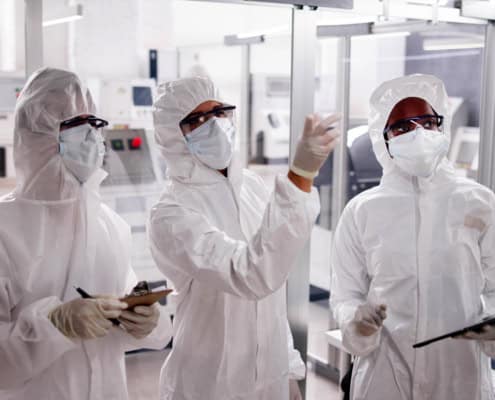
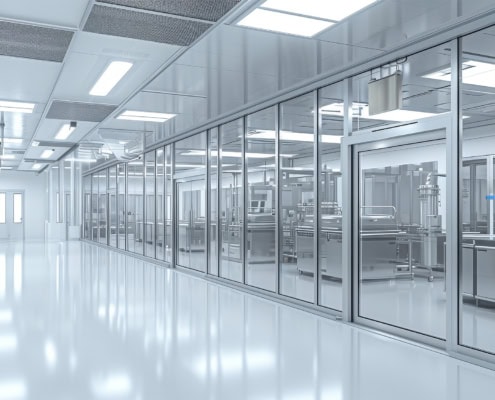
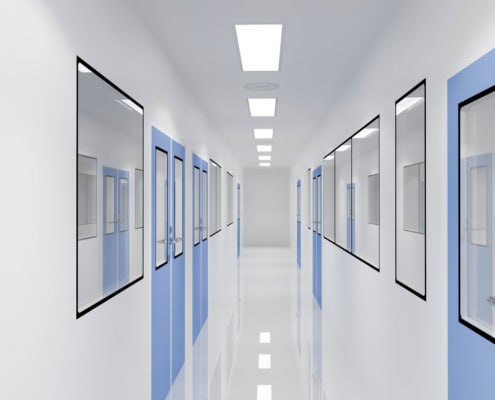
A controlled environment is any space where cleanliness, particle levels, airflow, sanitation, or contamination thresholds significantly influence operational outcomes. These environments may not be certified clean rooms, but they share one or more conditions that require more stringent cleaning procedures than typical office or industrial spaces.
Facility teams often underestimate these risks because they are not always visible, and general cleaning crews may not recognize the specific sensitivities involved.
Common examples include:
- Laboratories and R&D spaces, where contaminants interfere with experiments, biological samples, or testing accuracy. Even small amounts of dust, residue, or microbial presence can compromise results.
- Data centers and server rooms, where dust accumulation disrupts cooling systems, increases failure rates, and affects the reliability of high-value equipment.
- Food preparation or packaging areas, where sanitation and surface integrity directly impact product safety and consistency, often requiring stricter protocols than standard commercial sanitation practices.
Each of these environments requires cleaning that goes beyond “general appearance.” Instead, they demand processes aligned with contamination control—exactly what controlled environment cleaning is designed to address.