Commercial Cleaning Experts
  • Commercial Cleaning Services
        • Janitorial Services
        • Day Porters
        • Deep Cleaning Services
        • Clean Room Services
        • Construction Cleaning
        • Hard Floor Cleaning
        • Carpet Cleaning
  • Industries
    • Commercial Office
    • Medical
    • Warehouse/Distribution
    • Industrial Facilities
    • Education
    • Clean Room
    • Banks
  • About Us
    • Areas We Serve
      • Minnesota
      • South Dakota
      • North Dakota
        • Bismark
      • Michigan
      • Wisconsin
    • Blog
    • Careers
  • (763) 421-9554
  • Contact Us
  • Menu Menu

Why Distribution Center Cleaning Requires a Different Approach Than Standard Warehouses

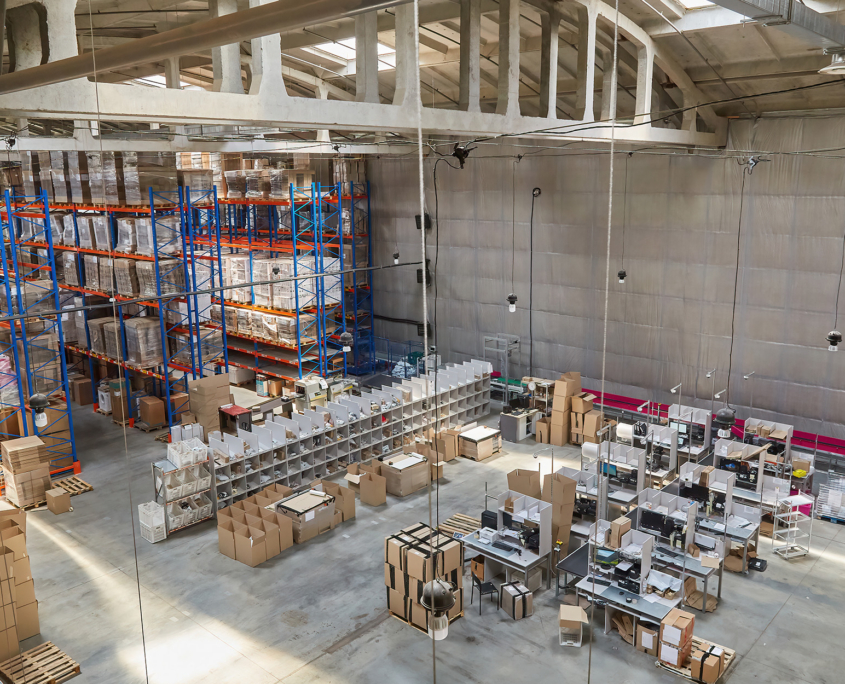
Walk the floor of a busy distribution center at the end of a night shift and the cleaning challenges are visible before you turn the lights on. Forklift oil traces follow every travel route. Cardboard dust sits between rack rows and near the dock doors. Spill residue from the receiving line is still present from the shift before.

Distribution center cleaning services are built specifically for this kind of environment, and most general janitorial contracts aren’t. This post breaks down the three challenge categories that separate a DC from a standard warehouse and what a program that addresses all of them actually looks like.

What Separates a Distribution Center From a Standard Warehouse

The distinction between a distribution center and a general warehouse isn’t just scale. It’s operational intensity, and operational intensity drives cleaning complexity in ways that square footage alone doesn’t capture. The right distribution center cleaning approach looks very different from what works in a lower-throughput storage facility.

It’s Not the Size of the Floor

A distribution center handles a significantly higher volume of inbound and outbound goods movement than a general storage warehouse. More forklifts, more freight cycles, more packaging throughput per shift. All of that activity concentrates contamination faster, deposits it in more specific locations, and makes it harder to keep pace with on a standard janitorial schedule. Facilities running active distribution operations need a cleaning program calibrated to the pace of that environment, not adapted from a template built for lower-traffic spaces.

The Contamination Profile Changes With the Operation

In a general warehouse, floor contamination builds gradually over the course of days. In a distribution center, it accumulates over a single shift. The same floor section near a receiving lane can go from clean to contaminated and back multiple times per day depending on freight volume and dock activity. A program that treats the DC floor as one uniform space rather than a set of zones with different contamination rates and cleaning frequencies isn’t going to keep up.

What Forklift Traffic Actually Deposits on Your Floors

Forklifts are the most consistent and predictable source of floor contamination in a distribution center. They run the same routes every shift and leave traces of that activity in the same places every time.

Oil, Rubber, and Exhaust Residue Follow the Travel Routes

Propane forklifts produce exhaust particulate that settles onto floor surfaces along travel lanes, where it mixes with dust and grit to form a bonded layer that mopping won’t fully remove. Electric forklifts don’t produce combustion exhaust, but hydraulic oil drip from lift mechanisms and battery fluid traces follow those same routes on the floor. Both forklift types transfer rubber residue from drive wheels onto floor surfaces in high-turn areas and near dock approaches. These deposits concentrate predictably along established forklift patterns, which means a distribution center cleaning program built around zone mapping can address them systematically rather than reactively.

Forklift Contamination Creates Compounding Slip Hazards Over Time

Oil and rubber deposits along forklift lanes don’t stay contained to where they’re deposited. Foot traffic and passing equipment spread them outward, and they build in layers across shifts. Left unaddressed, they contribute to the floor hazard conditions most commonly flagged during OSHA walkthroughs in distribution and warehouse environments. The issue isn’t a single spill that needs a one-time response. It’s a contamination pattern that requires a cleaning cycle matched to the pace at which it forms.

Spills in a Distribution Center Aren’t One Category

Distribution centers handle a wider variety of goods than most general warehouses, and the spills they produce reflect that variety. Treating all DC spills as a single problem type is one reason standard janitorial programs fall short in this environment.

What’s Actually Being Spilled Across the Floor

Product spills in an active DC can include liquid goods from damaged packaging, hydraulic fluid from lift equipment, moisture tracked in from dock doors during freight unloading, and adhesive residue from shrink wrap and banding materials. Near receiving docks, floor surfaces regularly absorb combinations of these materials in overlapping layers. Each type behaves differently when it dries and responds differently to cleaning agents, which is why a cleaning scope for a distribution center needs to account for the full range of spill types present, not just address visible wet spills as they appear.

Response Time and Program Structure Both Contribute

Spill management in a high-throughput DC isn’t only about how quickly someone responds to a specific event. It’s about having a program structure that anticipates where spills are most likely, defines response protocols, and ensures that residue left from a prior shift gets addressed before it becomes a persistent floor condition. Structured emergency cleaning response protocols built into the scope of a cleaning program provide that consistency at a level that ad hoc response simply doesn’t.

Distribution centers present cleaning challenges that most commercial janitorial contracts aren’t structured to handle. Commercial Cleaning Experts builds warehouse and distribution center cleaning programs for facilities across Minnesota, Wisconsin, North Dakota, South Dakota, and Michigan’s Upper Peninsula, with the equipment and crew structure to match the pace of active DC operations.

Explore Our Warehouse Cleaning Program

The Cardboard and Packaging Dust Problem

Dust in a distribution center behaves differently than dust in a manufacturing or industrial facility. Understanding that difference is the starting point for controlling it effectively.

Where DC Dust Comes From and Why It Travels Further

Cardboard dust generated from receiving, breaking down boxes, and moving packaged goods is lighter and finer than the particulate produced in metal fabrication or manufacturing environments. That lighter weight means it travels further before settling, deposits on rack surfaces and shelving at height as well as on floors, and recirculates easily when disturbed by foot traffic or air movement from open dock doors. Effective industrial dust control in a distribution center means capturing dust progressively as operations run rather than treating it as a floor-level problem that gets addressed at the end of the shift.

What Happens When Standard Equipment Addresses It Wrong

Dry mopping and redistributing dust with compressed air are two of the most common approaches general janitorial crews bring to DC environments. Both move the dust rather than removing it. Proper dust management in a DC requires the correct equipment sequence: high-filtration vacuuming of elevated surfaces and rack areas before any floor cleaning cycle begins. A cleaning scope that specifies equipment, sequence, and zone frequency for dust control prevents those shortcuts from becoming standard practice across every visit.

What the Right Distribution Center Cleaning Program Requires

Getting the right outcome in a DC starts with the right equipment and the right schedule structure. Understanding what a general-purpose janitorial contract is designed to do, and where it runs out, is what drives that decision.

Auto Scrubbers Handle What Mops Can’t

A mop is the correct tool for spot cleaning and small floor areas. It’s not the correct tool for tens of thousands of square feet of contaminated DC floor that needs consistent, thorough attention every shift cycle. Auto scrubbers, large ride-on or walk-behind machines that scrub, rinse, and vacuum simultaneously, remove the bonded contamination forklifts deposit along travel lanes rather than pushing it to the edges of a wet-mopped aisle. Pairing those scrubbing cycles with periodic hard floor restoration services keeps the surface in a condition where routine cleaning remains effective rather than losing ground to embedded contamination over time.

Off-Shift Scheduling Is a Logistical Requirement

Forklifts and cleaning crews can’t safely share active aisles. In a DC running two or three shifts per day, the primary distribution center cleaning services cycle has to happen during off-peak periods, typically overnight or between major shift transitions. A commercial warehouse cleaning services program that doesn’t account for this as a scheduling constraint produces crews that either work around active equipment or clean only the portions of the floor they can safely access, which is never the whole floor.

Work With a Team That Understands How Distribution Centers Operate

Distribution center cleaning isn’t a scaled-up version of standard janitorial work. It’s a different operating environment that requires equipment built for large floor surfaces, program design that accounts for forklift patterns and shift schedules, and crews experienced in the specific contamination types that high-throughput DC operations produce. Partnering with a warehouse cleaning company that brings that operational understanding, along with the equipment and staffing structure to execute on it, is what separates a program that keeps pace from one that’s always catching up. Commercial Cleaning Experts has maintained distribution, warehouse, and industrial facilities across the Upper Midwest since 1964, with 300 direct-hire employees, dedicated traveling project crews covering all five service states, and the equipment to handle both ongoing maintenance and periodic restoration work. Reach out to talk through what a program built for your operation looks like.

Share This Post

  • Share on Facebook
  • Share on X
  • Share on WhatsApp
  • Share on Pinterest
  • Share on LinkedIn
  • Share on Tumblr
  • Share on Vk
  • Share on Reddit
  • Share by Mail

More Like This

What Dirty Warehouse Floors Are Actually Costing Your Facility

Hard Floor Cleaning, Warehouse Cleaning
https://cleanworkplaces.com/wp-content/uploads/2026/08/The-Real-Cost-of-Dirty-Warehouse-Floors.jpg 1250 2000 Abstrakt Marketing /wp-content/uploads/2024/02/Logo-Edited.png Abstrakt Marketing2026-08-20 09:15:372026-08-20 14:37:40What Dirty Warehouse Floors Are Actually Costing Your Facility

How to Build a Warehouse Cleaning Checklist That Covers Every Zone

Janitorial Cleaning, Warehouse Cleaning
https://cleanworkplaces.com/wp-content/uploads/2026/08/Warehouse-Cleaning-Checklist-for-Every-Zone.jpg 1250 2000 Abstrakt Marketing /wp-content/uploads/2024/02/Logo-Edited.png Abstrakt Marketing2026-08-20 09:08:412026-08-20 09:10:01How to Build a Warehouse Cleaning Checklist That Covers Every Zone

Calculating the ROI of Recurring Janitorial Services

Facility Risk Management, Janitorial Cleaning
https://cleanworkplaces.com/wp-content/uploads/2025/12/Calculating-the-ROI-of-Recurring-Janitorial-Services.jpg 1250 2000 Abstrakt Marketing /wp-content/uploads/2024/02/Logo-Edited.png Abstrakt Marketing2025-12-18 15:08:412026-05-07 14:18:20Calculating the ROI of Recurring Janitorial Services

When Should Manufacturers Invest in Professional Equipment Cleaning?

Industrial Cleaning, Janitorial Cleaning
https://cleanworkplaces.com/wp-content/uploads/2025/11/When-Should-Manufacturers-Invest-in-Professional-Equipment-Cleaning_.jpg 1250 2000 Abstrakt Marketing /wp-content/uploads/2024/02/Logo-Edited.png Abstrakt Marketing2025-11-07 07:34:022026-05-07 14:18:22When Should Manufacturers Invest in Professional Equipment Cleaning?
modern office interior

The Professional Deep Cleaning Service Benefit Bible: All The Pros of Working With Pros

Janitorial Cleaning, Medical
https://cleanworkplaces.com/wp-content/uploads/2025/06/modern-office-interior.jpg 1250 2000 Abstrakt Marketing /wp-content/uploads/2024/02/Logo-Edited.png Abstrakt Marketing2025-06-30 14:44:082026-05-07 14:18:28The Professional Deep Cleaning Service Benefit Bible: All The Pros of Working With Pros
A worker in sterile coverall gown using Cleaning tool for cleaning laboratory. Cleanroom facility.

Why to Prioritize Controlled Environment Cleaning for Medical Manufacturing

Janitorial Cleaning, Medical
https://cleanworkplaces.com/wp-content/uploads/2025/02/A-worker-in-sterile-coverall-gown-using-Cleaning-tool-for-cleaning-laboratory.-Cleanroom-facility.jpg 1250 2000 Abstrakt Marketing /wp-content/uploads/2024/02/Logo-Edited.png Abstrakt Marketing2025-02-21 14:46:282026-05-07 14:18:33Why to Prioritize Controlled Environment Cleaning for Medical Manufacturing
Previous Previous Previous Next Next Next

Categories

  • Bank Cleaning
  • Clean Room Cleaning
  • Commercial Cleaning
  • Compliance
  • Controlled Environment Cleaning
  • Corporate Strategy
  • Emergency Preparedness
  • ESG
  • Facility Risk Management
  • Hard Floor Cleaning
  • Health & Safety
  • Hospital Cleaning Protocols
  • Industrial Cleaning
  • Janitorial Cleaning
  • Medical
  • Multi-Site Cleaning
  • Office Cleaning
  • Outpatient Facility Cleaning
  • School Cleaning
  • Vendor Evaluation
  • Warehouse Cleaning

Contact Us

"*" indicates required fields

This field is for validation purposes and should be left unchanged.

Areas We Serve

Minnesota

Michigan

Wisconsin

North Dakota

South Dakota

What We Do

Janitorial Services

Day Porters

Deep Cleaning

Clean Room Services

Construction Cleaning

Hard Floor Cleaning

Carpet Cleaning

Contact Us

Main: (763) 421-9554
Toll Free: (800) 248-2201
Fax: (763) 421-9621

info@mh-inc.com

Website by Abstrakt Marketing Group ©
  • Privacy Policy
  • Sitemap
Scroll to top Scroll to top Scroll to top

This site uses cookies. By continuing to browse the site, you are agreeing to our use of cookies.

OKLearn more

Cookie and Privacy Settings


How we use cookies

We may request cookies to be set on your device. We use cookies to let us know when you visit our websites, how you interact with us, to enrich your user experience, and to customize your relationship with our website.

Click on the different category headings to find out more. You can also change some of your preferences. Note that blocking some types of cookies may impact your experience on our websites and the services we are able to offer.

Essential Website Cookies

These cookies are strictly necessary to provide you with services available through our website and to use some of its features.

Because these cookies are strictly necessary to deliver the website, refusing them will have impact how our site functions. You always can block or delete cookies by changing your browser settings and force blocking all cookies on this website. But this will always prompt you to accept/refuse cookies when revisiting our site.

We fully respect if you want to refuse cookies but to avoid asking you again and again kindly allow us to store a cookie for that. You are free to opt out any time or opt in for other cookies to get a better experience. If you refuse cookies we will remove all set cookies in our domain.

We provide you with a list of stored cookies on your computer in our domain so you can check what we stored. Due to security reasons we are not able to show or modify cookies from other domains. You can check these in your browser security settings.

Other external services

We also use different external services like Google Webfonts, Google Maps, and external Video providers. Since these providers may collect personal data like your IP address we allow you to block them here. Please be aware that this might heavily reduce the functionality and appearance of our site. Changes will take effect once you reload the page.

Google Webfont Settings:

Google Map Settings:

Google reCaptcha Settings:

Vimeo and Youtube video embeds:

Accept settingsHide notification only